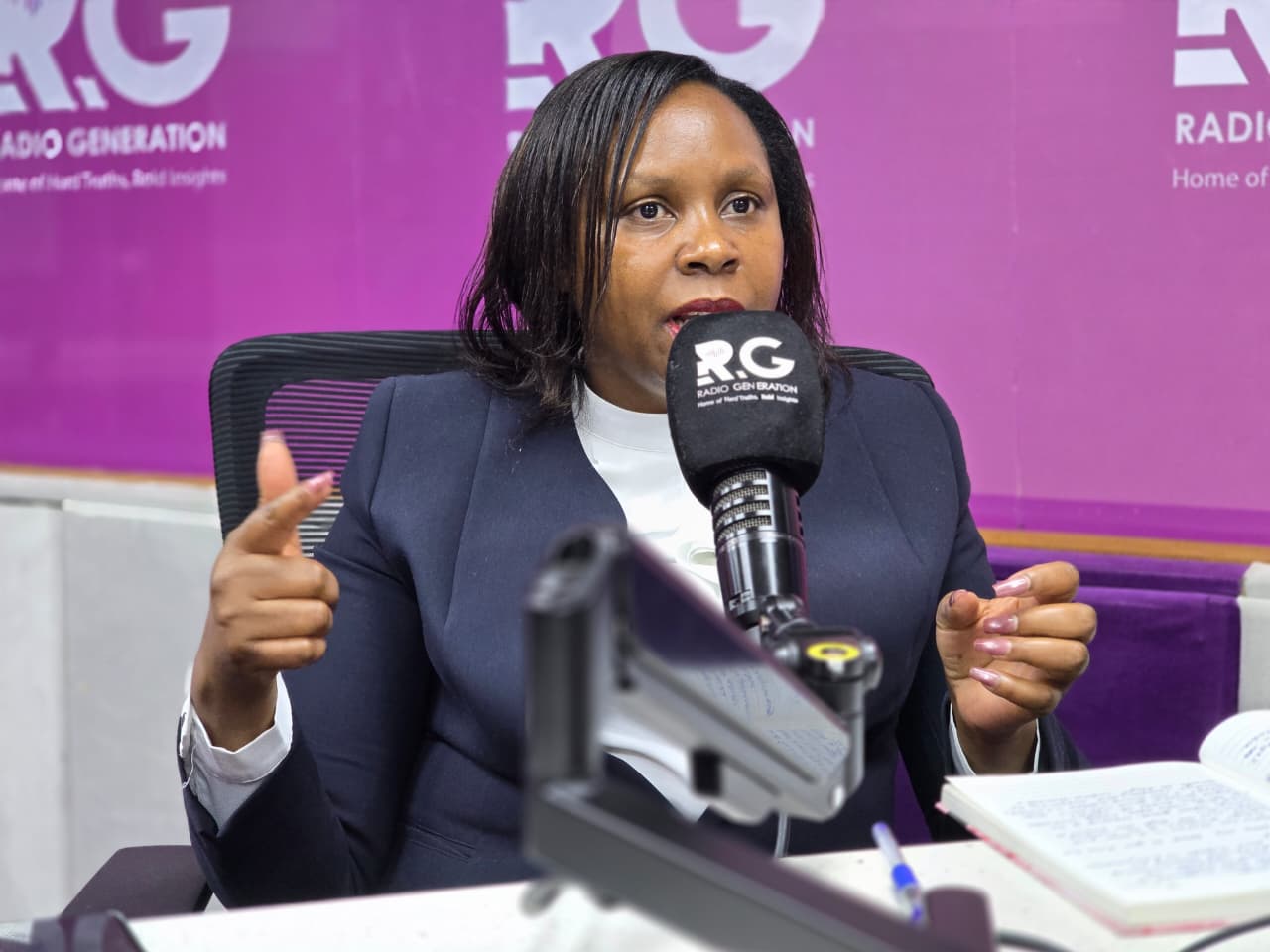
Head of Customer Service and Trading, Francis Drummond and Company Stockbrokers, Susan Rigitha says strict trading rules, ownership limits and price controls exist to protect investors and ensure fairness in the market.
Speaking on Tuesday, she explained that while demand and information drive price movements, safeguards prevent extreme volatility and insider abuse, allowing both individuals and institutions to participate on equal footing.
She said this structure allows regulators and issuers to assess uptake fairly.
“On February 19, the Kenya Pipeline Company IPO will have to close first,” Rigitha said, noting that any unsold shares can later be re-offered if necessary.
“Then we decide, do we reopen the market?”
KPC shares are being offered at a set price, with a minimum number of shares that an investor can apply for.
This structure is designed to make the offer accessible while maintaining order in the allocation process.
Individuals, companies, chamas, and other institutions are all eligible to participate, subject to regulatory requirements.
Ownership limits are also built into the IPO framework. Capital markets regulations restrict the percentage of shares that any single individual can hold, preventing excessive concentration of ownership and safeguarding the company’s public character.
Rigitha said KPC shares are currently priced at nine shillings, with a minimum purchase requirement of 100 shares.
“There’s a minimum of 100 shares,” she said, adding that this puts the entry cost at Sh900.
She noted that while there is no absolute maximum for investors, regulations limit how much of a company any single individual can own. “If you’re an individual, you can’t own maybe more than 5 percent of that company,” she said.
According to Rigitha, these limits are designed to prevent excessive concentration of ownership.
“There must be a cut-off,” she said, warning that without such controls, a single wealthy investor could dominate a strategic company.
The IPO allows Kenyans and other eligible investors to buy a stake in KPC by purchasing shares at a fixed offer price during a specified subscription period.
Instead of the company borrowing from banks to raise capital, the IPO enables it to raise funds directly from the public, while investors gain an opportunity to own part of a strategic national asset.
To participate, investors are required to have a Central Depository System (CDS) account, which electronically holds shares on behalf of the owner.
CDS accounts can be opened through licensed stockbrokers or banks with investment banking or stockbroking licences.
Physical share certificates are no longer issued, making the CDS account mandatory for ownership.
She added that institutions, companies, and “chamas” can also participate. “Any other company can also participate; everyone actually is involved,” she said.
Rigitha said share price movements after listing are driven by multiple factors, including information released by the company.
“There are so many factors that determine the fluctuation of a share in the course of that day,” she said, noting that positive or negative corporate information can affect demand.
She explained that daily price movements at the Nairobi Securities Exchange are regulated. “The price that opens the market the following day is the last trading price of the previous day,” Rigitha said.
She added that prices cannot rise or fall beyond 10 percent in a single trading session. “It will not go above 10 percent or below 10 percent,” she said, explaining that the trading system automatically rejects orders outside this range.
The Head of Customer Service said these limits are both regulatory and deliberate. “It’s the way the market operates, and also it’s by design,” she said, stressing that the aim is to prevent extreme volatility and protect investors.
However, she noted that during certain corporate actions, such as dividend declarations, shares may trade outside the usual limits.
On insider trading, Rigitha said it involves using non-public information for personal gain. “It’s when a trader has information that is not public and wants to take advantage of that information,” she said, describing it as a serious malpractice. She warned that such behaviour undermines fairness in the market.
She said regulators actively monitor suspicious trades.
“Capital Markets Authority, they have a surveillance department,” she said, adding that unusual trading patterns trigger investigations.
She stressed that consequences for insider trading are severe. “Very, very steep consequences,” she said.
She acknowledged that insider information can spread informally but said enforcement focuses on whether a trader benefited unfairly from privileged knowledge.
“If it is obvious that you benefited, because of knowledge that you shouldn’t have had,” she said, action is taken.
Rigitha said knowledge remains central to successful investing. “People who understand this thing well benefit from it well,” she said, adding that informed investors are better placed to anticipate risks and returns.
She concluded that market rules exist to balance opportunity with protection, ensuring that trading remains fair for all participants.































Comments
Sign in with Google to comment, reply, and like comments.
Continue with Google